The Slow Pace of Rapid Change

By FHI 360’s Gwen Cummings and Patrick Fine
Gillooley-64.jpg

“If I were to summarize [the future] in one word, it would be change.”

-Alice Albright

Barely two months ago when I convened four leaders from the education sector for an informal discussion on the future of education, little did I know how prescient Alice Albright’s words would be. The panelists — Alice Albright, Rebecca Winthrop, Warren Simmons and John Gillies — have  played influential roles shaping policy and practice internationally and in the United States. In keeping with this year’s theme of my podcast A Deeper Look , I asked this eclectic group of experts how they expect education to evolve during the 2020s. In the past 60 days, education systems around the world have been paralyzed without warning by the global response to COVID-19. Even as we now contemplate a post-pandemic world, insights from this discussion offer valuable perspectives.

The panelists agreed on several big trends driving changes and reform in education policy and practice. Among them were climate change, migration, children in emergencies, technology, cultivating 21st-century skills, girls’ education and challenges with education financing. Now we must add to this: education during a pandemic.

Keeping these globally impactful elements in mind, here are four trends we can expect to shape education development in the next decade:

1.     Education systems will adapt to new needs and skills

Rebecca Winthrop spelled it out clearly when she said we need to redefine “where learning takes place, how it takes place and who is involved.” Pivotal to that, and central to all the trends that came out of this conversation, is ensuring that local actors are at the heart of creating solutions. With great variance in what 21st-century skills means for different areas, new approaches and models for organizing how learning occurs will bring transformative change to communities and education institutions everywhere.

2.     The role of international organizations will change

The traditional project-based model, in which outsiders provide temporary assistance to define and solve problems, will fade away. Experienced and well-qualified local educators, professionals and local actors are taking the lead and will be selective in when and what kind of external support they require. As John Gillies put it, “Systems change is a form of social mobilization.” And, new voices are empowered to take initiative. This shift encourages multiple actors, not just educators or experts, to jointly fashion new processes that produce diverse results.

This implies a change in the role played by international organizations, which is likely to evolve more toward issues advocacy and thought partnership and away from service delivery.

3.     Education finance must be restructured

The traditional education model is inherently expensive, and social sector funding is often first to be placed on the cutting block when public budgets come under pressure. This is likely to be even more important in a post-pandemic world than when our panelists considered the problem in February. We are seeing examples of countries breaking free of this model and utilizing cost-consciousness to drive education reforms. As Warren Simmons pointed out, this is an opportunity for big businesses that have traditionally partnered with large agencies to instead partner with local educators to bring about grassroots change that serves both community and parochial interests.

Still, businesses and private organizations cannot generate enough funding to replace government support. Mass education remains an inherently public responsibility, and organizations like the Global Partnership for Education (GPE) that work with governments to devise new solutions to the financing challenge, including customized hybrid financing and public financial management reforms, will play an important role in the 2020s.

4.     New and unique solutions will be used to address specific problems

The topic of innovation came up again and again throughout the discussion and will undoubtedly be a critical factor in all of the trends outlined above. Right now, American children from preschool to college are convening via videoconference, if they are lucky, and studying with the aid of parents or on their own, if their schools are not as prepared. The promising news and current state is that new education solutions — many of them technology based — finance mechanisms, and partnerships are ubiquitous across the global landscape. What we must look out for in the coming decade is discerning between flashy designs and truly high-value solutions, a process that will inevitably involve experimentation and iteration.

There was consensus among these four leaders that the next decade will be fraught with daunting challenges and at the same time full of promising opportunities. With only 10 years left for the world to achieve the Sustainable Development Goals, the panelists concluded with a somber note of caution that in a world where social and technological change occurs at a dizzying pace, we are likely to be frustrated by the difficulty and slowness of mobilizing the political will, financing and actions needed to achieve SDG 4. This leaves us with a striking contradiction: Why in a world of rapid change do the reforms we seek in social delivery seem so slow and difficult to attain?

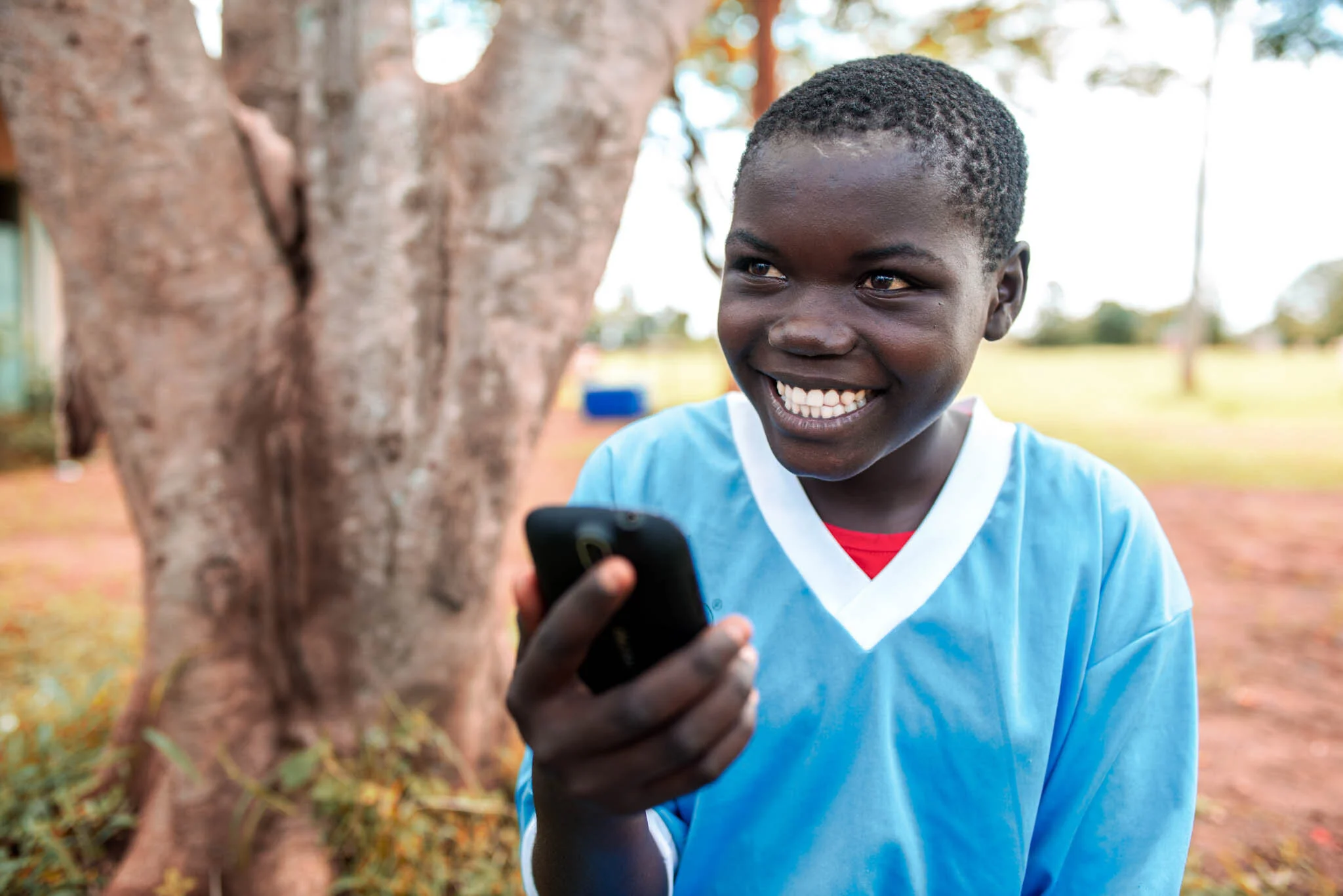
Photo Credit: Worldreader

BEC Members Pivot to Meet New Learner Needs during COVID-19

The Basic Education Coalition (BEC) developed this document to highlight how international education programs are adapting to meet new learner needs that have emerged due to the COVID-19 crisis.

Specifically, the purpose of this document is to:

  • Share the innovative ways implementing organizations are continuing to provide learning opportunities during COVID-19.

  • Using this evidence,advocate for the importance of continued education during times of crisis.

  • Provide resources,strategic approaches,and information for organizations adapting to the new operating environment.

Check out the amazing work BEC members are doing to keep children learning here or by clicking the image below!*

*Please download the document to enjoy it in the side-by-side view for which it is formatted.

*Please download the document to enjoy it in the side-by-side view for which it is formatted.

Effectively Measuring Early Childhood Learning and Development 

To improve a child's social-emotional skills, FH encourages playdates, visits, and organizes children's clubs with interactive games, like this one being led by an FH Peru staff member. 

To improve a child's social-emotional skills, FH encourages playdates, visits, and organizes children's clubs with interactive games, like this one being led by an FH Peru staff member. 

By Jana Torrico 

Communities cannot rise out of poverty if their children do not thrive. That’s why early learning education and development programs that set a strong foundation for a child’s capacity to learn throughout life — across cognitive, social-emotional and language domains — are critical to later success. But how do we determine which approaches lead to that “strong start” global development practitioners strive for?

Experts agree that interventions within the first five years are the most strategic, cost-effective, and influential ways to alter the course of a child’s academic career. School success — a reduction in grade repetition, increased academic gains, increased salaries upon graduation, and, ultimately, escaping from poverty — begins during the earliest formative years, before primary school. It’s why the UN has outlined in Sustainable Development Goal (SDG) 4.2, “by 2030, all girls and boys have access to quality early childhood development, care and pre-primary education so that they are ready for primary education.”

Many approaches are being tried around the globe, but the dearth of robust evidence from impact evaluations has been a challenge to achieving access, equity and quality in early childhood education (ECE). Across the 16 countries where my organization, Food for the Hungry (FH), plans or implements childhood development and education programs, we have had difficulty comparing disparate data from varying evaluations. What our sector needed was an effective global assessment tool that accurately measured, then aggregated and shared the data across multiple contexts. 

In response, Save the Children developed IDELA, the International Development and Early Learning Assessment, an open-source tool that measures four key areas of early development: social-emotional skills, emergent numeracy, emergent literacy, and motor skills in children ages 3.5 to 6 years. With IDELA, every child is a “data point” and every partner who utilizes this tool is asked to share each data point as part of a worldwide, collaborative effort to aggregate what we’re learning about what’s working in early education. IDELA is now used in 70+ countries, and FH has launched it in 13 countries where we work, one of it’s biggest rollouts.

IDELA allows FH to share a common language and standardized definitions across different countries. When we refer to “emergent literacy”, for example, no matter where they live and what language they speak, our staff automatically think of skills like print awareness, expressive vocabulary, first sounds, and letter recognition. Implementing IDELA has made us better informed about our targeted early learning interventions. As a result, we are able to more effectively ameliorate, implement and advocate for better programs for the youngest among us.

We offer three brief case studies that highlight areas where IDELA has helped diverse local practitioners pivot and improve ECE:

Emergent Literacy 

Overall low IDELA assessment scores told our local staff in Burundi that children here were not acquiring the skills needed for successful transition into first grade. Emergent literacy was the lowest-ranked domain, which spurred a two-fold approach to increase language development skills. 

FH established common play areas in the community, where children can sing songs and use expressive vocabulary to communicate more with peers. At home, FH is training parents and caregivers through Care Groups to have more conversational interactions with their children, including using higher-level vocabulary in daily life. Households were also taught to involve young children in daily activities, like going to local shops and markets and learning to name items. We also encourage elevating expressive vocabulary with pictorial books that parents or older children can read together. When our Burundi staff ran into a challenge of finding stories and resources in local languages, they participated in a book translation challenge—which resulted in 158 different children’s books translated into the local language.

A world away from Burundi, children in the Dominican Republic (DR), also scored low in emergent literacy, especially expressive vocabulary. As a result, our local DR staff recommended building community libraries, and establishing “parent schools” in 52 neighborhoods where parents are taught early stimulation practices. By parents engaging children through books and storytelling, children learn to identify symbols and letters that will be the building blocks of their literacy development. We equipped parents with appropriate tools, even parents who are not literate.

In the Philippines, children dance along with their peers during an afterschool program. Through games and play materials, children can begin building social capital with their peers.  

In the Philippines, children dance along with their peers during an afterschool program. Through games and play materials, children can begin building social capital with their peers.  

Social-Emotional Skills 

In the DR, the IDELA assessment revealed a surprising trend. Social-emotional skills among children was the second-highest domain after motor skills, the opposite of trends we’ve seen elsewhere, where social-emotional skills usually score lowest. (Our hunch is that the social, Caribbean culture here inherently strengthens these skills within and between families.) In contrast to the DR, we learned small gains were being made in social-emotional development in Guatemala. A child’s social-emotional development is as important as their cognitive and physical development. But we are not born with social-emotional skills, such as empathy , awareness of our own feelings, and resolving conflict to build healthy relationships with others. It takes practice. IDELA data revealed to our Guatemalan staff that children don’t often play together. So, they began encouraging play and provided games and materials to help build early social capital. Our staff implemented early stimulation training modules into their Care Groups, and are also raising awareness about social-emotional learning with others who interact with young children, including healthcare facility workers and pre-school teachers.

Emergent Numeracy

When children in Bangladesh scored low across the four IDELA areas, FH’s Bangladesh staff took a closer look at the data and identified emergent numeracy as a particularly struggling domain, with 40 percent of children completing less than half the activities correctly on the IDELA assessment. 

In response, our staff decided local preschool teachers needed improved training and classroom materials like number charts, posters of different geometric shapes, and basic arithmetic resources to improve number recognition. In addition, staff encouraged caregivers to involve children in daily activities like counting chickens and other livestock, and for caregivers to set aside time to interact with their children as they went about their daily chores. 

Consistent assessment makes a qualitative difference

IDELA has become critical to informing the work of our early childhood development practitioners, filling in gaps that lead to more effective outcomes. We hope this innovative measurement tool will lead to even more holistic approaches that will someday encompass spiritual or invisible dimensions of overcoming poverty, such as the emergence of hope and care for others. When we better understand and meet the early needs of every child, encouraging them to flourish in every sphere, that “data point” and “outcome” will be a child with a more promising future.

One of the four key areas that IDELA measures is motor skills. In the Dominican Republic, children play with early childhood development toys like building blocks, which help with creative thinking, cognitive skills, and motor skills.

One of the four key areas that IDELA measures is motor skills. In the Dominican Republic, children play with early childhood development toys like building blocks, which help with creative thinking, cognitive skills, and motor skills.

About the author:
Jana Torrico is the Senior Specialist of Global Education Programs for Food for the Hungry, an international relief and development organization graduating communities from extreme poverty in over 20 countries worldwide.