Celebrating Teacher Appreciation Week with a Global Teacher and Teacher Coach Study

In honor of teacher appreciation week, let’s take a look at a fascinating global teacher and teacher coach study conducted by BEC member Teach for All. Below, Robbie Dean (Teach for All’s Global Director of Research, Evaluation & Network Learning and BEC’s Monitoring, Evaluation, Research, and Learning Co-Chair) shares about their first pilot effort to implement applied research to learn about the Teaching As Collective Leadership framework.
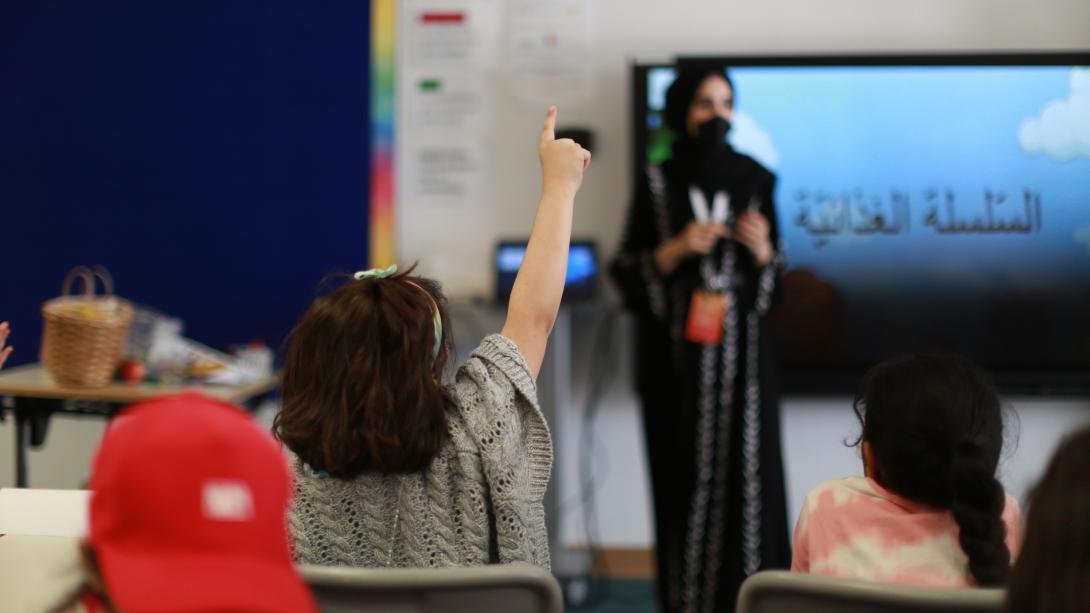
As a member of Teach For All’s research team, I support our network to explore an ambitious learning and research agenda on the impact of collective leadership development and how to accelerate the impact of teachers to develop classrooms that cultivate students as leaders of a better future. In partnership with the Jacobs’ Foundation, our team is working to build our global network’s internal research capability and experimenting with how we incorporate new forms of evidence generation and feedback into our approach to network learning, in addition to providing feedback on important learning questions associated with our Teaching As Collective Leadership (TACL) initiative, a framework for developing students as leaders that includes actionable and locally customizable guidance for teachers, teacher coaches, and program designers who are oriented towards this different view of the purpose of education.

The Global Teacher and Teacher Coach Study marks our first pilot effort to implement applied research to learn about the Teaching As Collective Leadership framework. The study data is from 48 teachers and 24 teacher coaches representing nine network partners across varied contexts. Our study investigates to what extent teachers develop mindsets aligned with collective leadership, and what kinds of classroom strategies they engage in as a result of exposure to the TACL model. In 2022, we tested two different delivery methods of the TACL framework: a series of workshops between teachers and their teacher coaches, and a comparison group of teachers and their teacher coaches in which we provided virtual instructions on how to use the TACL framework and resources. Both the intervention and comparison groups were designed to emulate common ways Teach For All offers learning experiences and insights on teacher development to our network partners.  

In both groups, we engaged with teachers and teacher coaches from across the Teach For All network to implement insights, mindsets, and instructional strategies in their classrooms based on the TACL framework. Recently, the study was featured in an episode of the BOLD Podcast, which highlighted the experiences of three network teachers: Aljawhara Al Athba from Teach For Qatar, Isaac Galindo from Enseña por México, and Ganiyat Muritala Wuraola from Teach For Nigeria. These stories provide a snapshot of the innovations that teachers and their teacher coaches are implementing in their classrooms to foster student leadership, including more concerted efforts to support students’ sense of belonging, a greater emphasis on strong teacher-student relationships, and strategies for social and emotional learning development. Hear more about their suggested strategies for other teachers in this podcast.

Our study report is helping our global network to learn more about the enabling conditions to support teachers to develop students as leaders. The following are a few major insights from both quantitative and qualitative data:

  • Teacher mindsets are highly aligned with TACL already, and they also can strengthen over time: Overall, both teacher groups (our treatment and comparison group) tended to score high in terms of their mindsets—such as their beliefs in community as a source of power and the extent to which educational inequity is systemic—suggesting that teachers may have already had strong alignment with the beliefs and mindsets associated with TACL prior to engaging with the framework. Nevertheless, our analysis indicates some evidence that more frequent exposure to TACL concepts may in fact increase these mindsets over a short time period.

  • Teacher coaches are key: Unilaterally, we heard from teachers that their teacher coaches were key in supporting them to apply the TACL framework. We also heard from teachers whose teacher coaches consistently applied the tools and resources and provided feedback, that they felt they had stronger knowledge of the framework and also noticed more shifts in their mindsets and changes in their actions. We hear this consistently in the stories shared by the teachers interviewed in the BOLD podcast. 

  • Opportunities for teachers to share their experiences with other educators matter: Many teachers and their teacher coaches shared that they deeply appreciated and learned from discussing their experiences in the classroom with other teachers and teacher coaches from across the network, in particular those who participated in the intervention group. 

  • There is strong evidence from the network that teachers are fostering environments to empathize and connect with their students: We’ve demonstrated evidence that teachers in our study quickly adopted strategies related to building strong, empathetic relationships with their students. We heard from teachers and coaches that they learned more about the importance of building meaningful relationships with students through the experience, and this came out clearly in interviews. 

We also received constructive feedback and challenging findings from our data and from the experiences of our teachers and teacher coaches in this study. For instance, we found fewer indications than expected of teacher strategies that emphasize student-driven learning and student autonomy in the classroom. This may be an area for further intervention to help teacher coaches and teachers create plans for more holistic approaches to employing multiple strategies in the classroom with equal emphasis. We also heard from teachers and teacher coaches that they would like to have more time to first internalize the model and make meaning of this framework, and additional time to implement and reflect on how the model works in their own classrooms to help strengthen student leadership. We are confident that this feedback and the iterative design process we are taking with the TACL team is helping us to strengthen the framework and resources, and providing our research team with new tools and opportunities to apply a new adaptive research and learning approach. 

The Global Teacher and Teacher Coach Study is just the second of three evidence generation/feedback activities around the Teaching As Collective Leadership Framework in partnership with Jacobs Foundation. In 2021, we preceded this study by a beta-testing of TACL tools. One important limitation of our study is that it did not aim to evaluate the potential effects of the model and interventions on students. For our future research, we will strive to determine whether these shifts in mindsets and teacher actions lead to improvements in holistic student learning outcomes by working with a network partner (Enseña por Colombia) to adapt and implement programmatic changes to its training and support of teachers in 2023 and 2024. We are excited to continue to learn and share our insights from our adaptive learning and research strategy with practitioners within and beyond our global network.

Collaborating in a big way for the littlest ones: the road to revise Senegal’s pre-primary curriculum

Written by Fabiola Lara (Save the Children) and Pape Sow (Executive Assistant to the Commissioner for Human Development and Social Affairs at the Economic Community of West African States, formerly Save the Children)

Photo Credit: Save the Children

Many roads as of late seem to start at the onset of COVID-19 but this one starts much earlier. In March 2019, Save the Children led a Ready to Learn (formerly ELM)[1] training for Save the Children staff and Ministry of Education inspectors in Dakar, Senegal. One year later, COVID-19 was upon us and, while we were all thinking about what future lies ahead for us, we were especially concerned for young children, the “littlest” ones, and how the pandemic would impact future learning outcomes and opportunities for quality pre-primary education.

Recognizing the impact that pre-primary education has on future grades and lifelong learning, in March 2021, through a World Bank-funded project known as Investing in the Early Years for Human Development Project in Senegal (PIPADHS), Save the Children, in close collaboration with the Government of Senegal, set out to revise the national pre-primary curriculum for all three levels of pre-primary – petite section, moyenne section, and grande section. This project focused on children ages 3-5 years old, reaching a total of 122,352 children (16.3% of the general school-aged population, with young girls representing 49.8%). It was a massive undertaking, as the last time that the pre-primary curriculum had been revised was in 2008.

As part of the curriculum revision process, a Strengths, Weaknesses, Opportunities, and Threats (SWOT) analysis was completed early on to identify priorities for the revision and ways to make the curriculum responsive to present-day global challenges, as well as Senegalese society. A benchmarking study[2] was then completed to assess curricula from countries in the Africa region and to understand regional pre-primary priorities. The study outlined commonalities in curricula across Ghana, Rwanda, Cameroon, Ethiopia, and Tanzania. A key finding of this study was that, while these five countries had many differences, the following were central themes. The curricula were:

  • Competency-based. This means that the curricula are designed with the goal to develop general or specific competencies among children – in some cases, these competencies are cross-cutting across various levels of education.

  • Focused on various learning domains. These include literacy, numeracy, social-emotional development, etc. Some are holistic in nature (i.e. not only focusing on ‘academic’ domains) but others have more narrowly defined domains such as science and technology.

  • Structured around different themes or topics. These include topics such as “me and my family”, “the world around me”, “my country”, etc.

  • Standard-based. They include specific achievement standards for the children from each age group.

  • Inclusive of a detailed list of activities. This offers support to teachers in order to help children achieve standards outlined.

  • Inclusive of guidance around schedule and timing. The curricula contain an indication of how much time should be allocated to each theme, how long the periods should be, etc.

  • Inclusive of assessment guidance. The curricula provide some guidance around child assessment.

Soon after, a series of workshops were conducted to define the new learning domains and format of the newly-revised curriculum across the three levels of preprimary. Technical teams were established to work on the different sections of the curriculum according to the following new learning domains: Language and Literacy, Mathematics, Discovery of the World, Social-Emotional Development and Overall Well-Being, Psychomotor Development, and the Arts. Save the Children’s two evidence-based technical approaches, Ready to Learn[3] and Social Emotional Learning Foundations (SELF), were integrated as part of the revision process. Ready to Learn provides caregivers and teachers with guidance on how to support the development of foundational emergent literacy and math skills among young children (ages 3-6 years) while SELF focuses on promoting social engagement, self-management, and emotional awareness in young children.

Some key milestones of the project included:

  1. From May 2021 to August 2021, the new set of learning domains were proposed and refined, development of technical materials for all three preprimary levels was completed, and objectives for pilot testing of portions of new curriculum was finalized.

  2. From November to December 2021, Ministry Inspectors participated in a training of trainers (ToT) led by Save the Children based on the new curriculum. Following the ToT, teachers in three regions of Senegal (Fatick, Saint-Louis, and Kolda) received training from Ministry Inspectors in preparation for the “mini-pilot.”

  3. On December 2021, a “mini-pilot” was conducted to test different portions of the curriculum – mainly language and literacy as well as mathematics as these were the two areas that were identified as lowest achieving in learning outcomes for preprimary children.

  4. From March 2022 to April 2022, adaptations were made to the curriculum materials to include lessons learned from the “mini-pilot” and more finalized versions of the curricula were completed for further technical review.

Feedback from the “mini-pilot” was promising – the materials were well received by teachers but further modifications were identified. Upon delivering the curriculum in April 2022, the Ministry of Education and Save the Children had discussions on conditions for successful implementation going forward:

  1. Need for effective leadership that is capable of transformation and supported by professionals driving a social and political demand for change. This includes capacity building activities in all areas to ensure adequate planning, implementation, monitoring and evaluation of the progress of the desired change.

  2. Adopt a system approach that not only favors learners and the classroom but also integrates essential contributions of the school, inspections, training institutions, the Education, communities, and families.

  3. Real change is based on rigorous planning and implementation, a solid database, effective evaluation and a continuous learning system. This means not only creating the possibility of influencing the content of the strategies proposed but also facilitating conditions conducive to their gradual up-take. An evaluation of the new curriculum after two years of scaling up and the lessons learned from this exercise will guide the consolidation and sustainability of the transformation system and enable us to verify our hypotheses of change.

  4. Finally, increase provision of the necessary resources for successful implementation of the desired changes. All changes have a cost. It will be important to rigorously evaluate them and ensure that the necessary resources are put in place at each phase of the change implementation process.

Currently, the Department of Preschool Education (DEPS) is leading further revisions to the preprimary curriculum across the three levels and last month, teachers were trained on the new curriculum to be implemented in the following seven of the 14 regions of Senegal: Matam, Tambacounda, Kolda, Fatick, Kaolack, Kaffrine, and Diourbel. The implementation of the new curriculum is expected to produce critical insights on what is working and how the revised curriculum can be improved to further address the needs of children. This is a pivotal moment to shape future generations of children in Senegal and to provide them with the skills they need to thrive as they progress through the school system and beyond into adulthood.


[1] Save the Children. 2018. Ready to Learn: Common approaches. Retrieved from: https://resourcecentre.savethechildren.net/pdf/ready-to-learn-2-pager.pdf/

[2] Chakhaia, Lela and Abimpaye, Monique. 2021. Overview of Pre-primary Curricula in Selected Countries in Sub-Saharan. Save the Children US: Washington, D.C.

[3] Amente, A., Yenew, A., Borisova, I., Dowd, A. J., Pisani, L., Dang, S., & Anís, K. (2017). Save the Children’s Emergent Literacy and Mathematics Initiative: Supporting Educators’ and Parents’ Efforts to Improve Young Children’s School Readiness. YC Young Children, 72(4), 31-34.

Virtual, Low-Tech Approaches for Transient Young Children and Families for Resilience Building and Positive Parenting during the COVID-19 Pandemic

Written by Fabiola Lara (Save the Children, BEC Early Childhood Education Working Group Co-Chair)

If there is anything that these past 20 months have taught us all it is to be flexible and nimble. That is exactly the approach that Save the Children took in a recent project entitled “Reducing the effects of toxic stress in young children on the move through positive parenting and resilience building in Iraq and Colombia” funded by the Bureau of Population, Refugees, and Migration (PRM). The one-year project ended in September 2021 and was designed at the start of the pandemic when there was still so much uncertainty about what lay ahead. Given the focus on transient young children ages 0-5 years and their families, one question was clear – “How could they continue to be supported during COVID-19 social distancing measures and reduction of services?”.

Evidence points to the importance of the early childhood years and positive caregiver-child relationships, particularly in uncertain times. Opportunities for play, exploration, and bonding relationships between caregiver and children enable children to become resilient and better cope with frustration, fears, and worries they may experience later in life.[i] At the onset of the COVID-19 pandemic, children on the move were (and continue to be) at further risk of facing significant, negative impacts on their health, learning, wellbeing, and safety in addition to those they may already be facing from forced displacement.[ii] Added stresses on families, particularly during “stay at home orders” and quarantines, has led to increased cases of domestic violence.[iii]

As part of this project, two main technical approaches (Save the Children’s Resilience Building and Transformative Male Caregiving approaches) were adapted and implemented for conflict-sensitivity and responsiveness to the changing dynamics and needs of the intervention communities in Iraq and Colombia. Both approaches, first piloted in El Salvador, were adapted for delivery using WhatsApp (calls and group chats) as well as standard phone calls and SMS text messages. In Iraq, the approaches were implemented in Bardarash and Gawilan camps to access 500 Syrian refugee families and in Colombia, 360 Venezuelan migrant families living in informal settlements in La Guajira.

As part of the Resilience Building approach, primary caregivers (largely women, but some men as well) in both countries were convened in 12 virtual caregiver group sessions that covered topics spanning self-care, managing emotions, setting goals and routines, protecting children from harm, and bonding across various activities with children. For the Transformative Male Caregiving approach, men gathered in male-only groups for ten sessions that covered parallel topics as the Resilience Building approach but also focused on goal-setting and reinforcing positive behavior that supports individual and family wellbeing. In between sessions, caregivers shared audio, video, and photo footage in chat groups of their engagement with their co-parenting partners and children such as family activities, reflections, and achievements. Additionally, expectant, new, and long-time male caregivers received key messages and nudges via SMS messages on topics related to self-care, support to children, and support to co-parenting partners. Primary caregivers (both men and women) received activity kits with games to complete, together with their children, to reinforce positive and playful caregiver-child interactions.

Initially, Save the Children faced some challenges, in both Iraq and Colombia, during implementation as the majority of caregivers were not accustomed to using smartphone-based platforms or were using them for the first time. Once caregivers received support and became more familiar, other challenges emerged. Regular access to data network connection was not always guaranteed as constant movement of families and periods of limited- to no- communication (between staff and families) occurred. Additionally, men were initially not accustomed to convening in a support-group setting and therefore their participation was difficult to secure. In both contexts, Iraq and Colombia, men typically associated any support related to children and caregivers as exclusive to women and thus would often refer their wives or encourage them to attend.

Despite these setbacks, the project produced meaningful gains and garnered positive feedback from families. Though barriers to network connection persisted and families continued to move (and in some cases, return), both men and women regularly shared positive changes and the impact the project had on their own lives. In both Iraq and Colombia, men reported feeling closer to their children and observed positive changes in their children’s behavior now that they were more engaged in children’s lives, thanks to their participation in the sessions.

I always depended on my wife to raise and tutor my children. I was the person they feared. After joining the transformative male caregiving sessions, I feel that I am now using my time more efficiently for my children. I have a closer relationship with them now and they are no longer afraid that I will beat them. Instead, they run to me when I arrive home. I see that my children feel happier and I have almost stopped smoking too.
— Salim (Syrian refugee father, Gawilan)

Men also reported that their motivation to continue participating in sessions was due to how critical it was for family unity. Project staff reported that men also naturally became a source of support to each other and would encourage other men within their group to keep participating and, in some cases, would show up to others’ homes (as restrictions allowed) to listen in on sessions together, which further reinforced their commitment to participating.

During group sessions, women shared that having a space to connect with other women allowed them to seek support outside of their families and find mutual encouragement from other women in similar circumstances. They also reported higher engagement from their husbands/partners in household tasks and responsibilities resulting in them feeling less stressed and more supported.

“I am now pregnant with my fourth child and my husband is a completely different person now than he was with our other three children. He is so attentive to my [individual] needs but also helps with the children, even does washing, cooking and other household chores.”
— Marta (Venezuelan migrant mother, La Guajira)

Through the feedback gathered from caregivers regarding the changes they were experiencing in their own lives throughout their participation, it is clear that this project and its approaches addressed critical needs of families on the move. Learnings from this project emphasize the need for adaptable, flexible delivery options to reach families during movement as well as the importance of addressing all caregivers, both men and women. The burden can no longer fall on one caregiver and strategies that directly address one caregiver while indirectly reaching the other fall short of addressing whole-family approaches that emphasize family harmony and commitment to wellbeing. The International Education industry needs to ensure that both men and women are equally supported because, in doing so, children and caregivers have the most to gain– leading to healthy, positive home environments that can mitigate stresses and adversity factors. More investment in the early years (especially as it relates to the intersectionality between gender, early learning, well-being and child protection) is critical, particularly for children and families in humanitarian and crisis settings. Program implementers need to make sure that these families continue to be supported and that innovative approaches address the dynamic nature of their situations. 


[i] Bunce, Maureen; Rickards, Anna. 2004. Working with Bereaved Children: A Guide. Children’s Legal Centre

[ii] United Nations. Policy Brief: The Impact of COVID-19 on children. 15 April 2020. Retrieved from:

https://www.un.org/sites/un2.un.org/files/policy_brief_on_covid_impact_on_children_16_april_2020.pdf

[iii] Human Rights Watch (9 April 2020). COVID-19’s Devastating Impact on Children. Retrieved from: https://www.hrw.org/news/2020/04/09/covid-19s-devastatingimpact-children